Ray Culver’s H2ONU Blurs the Line Between Novel, Artifact and Interactive World
The 752-page full-color debut combines conspiracy, love, faith, technology, environmental warning and personal reinvention in an experience designed to continue beyond the printed page.
By the H2ONU Newsroom
HONOLULU, HI — Most debut novelists introduce readers to a story. Ray Culver is attempting something considerably larger.
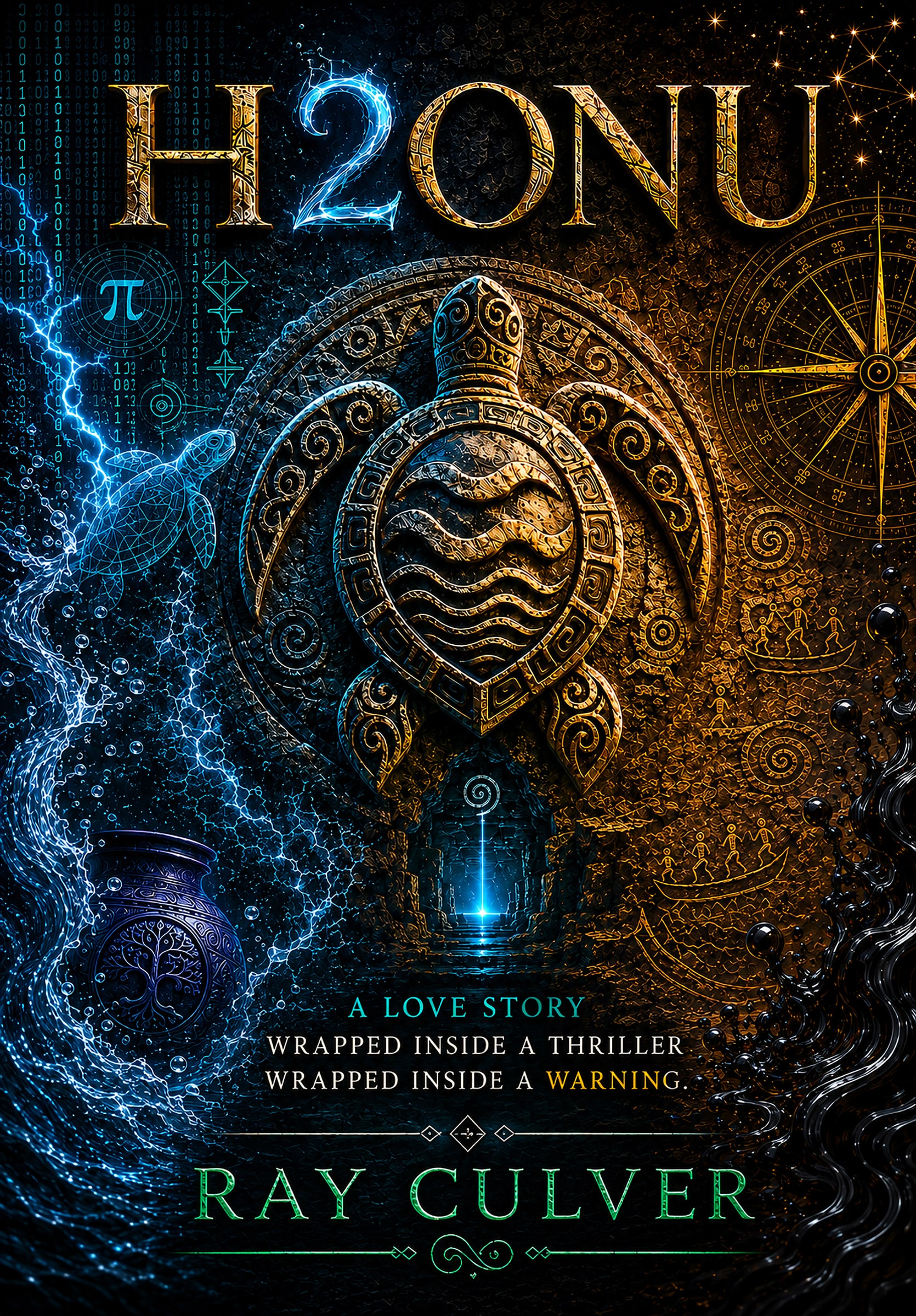
With H2ONU, Culver has built a 752-page, full-color hardcover, an interconnected digital world, an interactive archive and an environmental initiative around a single sprawling narrative. The result is neither a conventional thriller nor a traditional multimedia campaign. It is an unusually ambitious attempt to combine the physical, digital and interactive worlds into one experience.
Eight years in the making, the 80-chapter novel will be released July 15.
At the center of the story is a discovery that should be a miracle: a revolutionary water-based energy technology capable of ending humanity’s dependence on oil. Instead, it becomes one of the most dangerous inventions on Earth.
As governments, corporations, intelligence agencies and entrenched power structures move to control or destroy the technology, the discovery connects lives across Hawaiʻi, Philadelphia, Beijing, Texas, the Pentagon, London, Canada and the Pacific Ocean.
The premise gives H2ONU the architecture of a global conspiracy thriller. But Culver uses that framework to explore something more intimate.
Beneath the political conflict and speculative technology is a story about love, loss, faith, identity and the human struggle to choose a different life. Its characters confront not only external systems of power, but the internal forces that keep people trapped in fear, grief, ambition and repetition.
Culver describes the novel with a line that has become central to its identity:
“A love story wrapped inside a thriller wrapped inside a warning.”
That description is more than marketing shorthand. H2ONU moves between romance and espionage, environmental collapse and spiritual inquiry, political manipulation and personal reinvention. Ancient symbols, sacred geometry, encoded prophecy and recurring symbols appear alongside corporate dynasties, covert operations and emerging technology.
Faith also occupies a central place in the novel, though not in the form of a simple religious message. The story places Christianity, Islam, Hawaiian spiritual traditions, ancient civilizations, science and mathematics into conversation with one another. It repeatedly asks whether faith and reason are truly opposing forces, or different languages attempting to describe the same underlying reality.
At the heart of that inquiry is a question that follows the characters throughout the book:
What happens when you start to see the pattern clearly?
The concept of a pattern is embedded throughout H2ONU. Spirals, waves, mirrored curls, numerical sequences and symbols recur across different characters, locations and periods of time. Some connections are explained. Others are left for readers to recognize on their own.
That layered construction is one reason Culver resists describing the project as merely a novel.
“H2ONU was not just written,” Culver said. “It was built. Every chapter, image, symbol and page was placed with intent.”
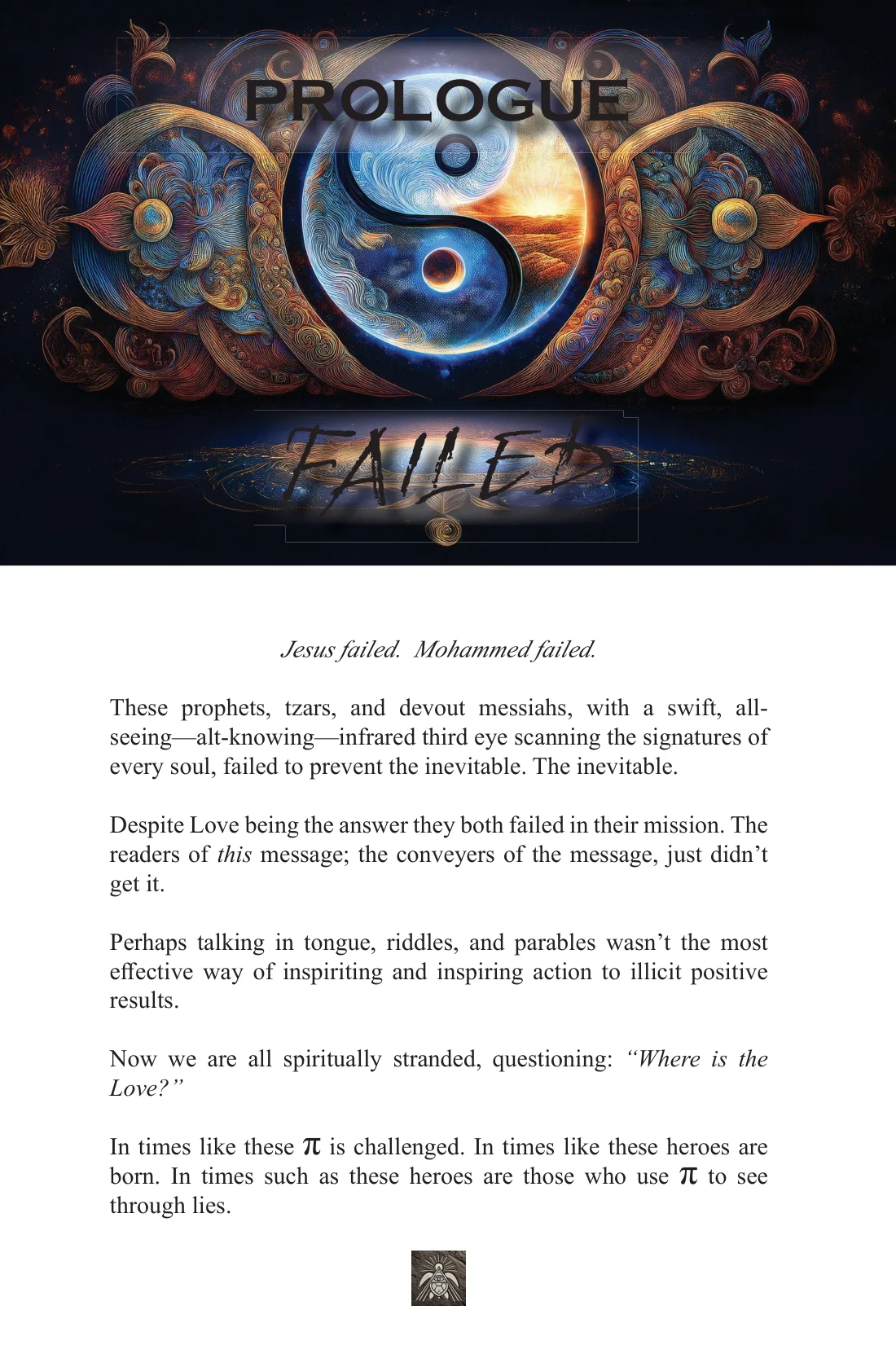
The physical edition reflects that philosophy. All 752 pages are printed in full color, with visual elements woven throughout the narrative. The hardcover is designed to feel substantial and collectible, closer to an archive or illustrated artifact than a standard commercial novel.
Culver’s insistence on the physical object is notable at a time when publishing increasingly favors shorter production cycles, lower manufacturing costs and digital-first consumption. Rather than simplifying the book for efficiency, he expanded it.
The size, color printing and elaborate design also make H2ONU a commercial gamble. A premium hardcover from a debut independent author asks more of readers than an inexpensive paperback or electronic edition. Culver appears fully aware of that risk.
The book is priced at $79.99, a decision the project addresses by emphasizing its construction, scale and role as the central artifact within the larger H2ONU experience.
That larger experience extends online.
At H2ONU.com, visitors can move through story pathways, character material, visual environments and hidden layers connected to the novel. The website is designed less like a conventional author page and more like an entry point into the book’s world.
Its most unusual feature is The Signal, an archive-style interactive companion that allows visitors to ask questions and explore the novel’s characters, symbols, technology, conflicts and themes.

Rather than presenting readers with a static synopsis or ordinary list of frequently asked questions, The Signal turns discovery into participation. Visitors are invited to follow threads, question the archive and decide how deeply they want to enter the story before opening the physical book.
The approach reflects a larger change in how stories can be presented. Books, websites, interactive systems and reader communities no longer have to exist as separate products. Culver has attempted to make them parts of the same narrative structure.
The physical book holds the story. The digital world expands it. The interactive experience allows readers to interrogate it.
That combination may be H2ONU’s most distinctive quality.
It also mirrors Culver’s own story of reinvention.
Shaped by Philadelphia and transformed by eight years in Hawaiʻi, Culver built the novel during a period marked by discipline, isolation, faith, loss and the pursuit of a different life. The project gradually grew beyond its original form, absorbing his interests in technology, spirituality, environmental responsibility, political power, psychology and the invisible systems that shape human behavior.
In the book’s opening dedication, he calls it “the sound of my soul.”
That personal investment can be felt in the scale of the work. H2ONU does not appear interested in remaining safely inside a single genre. It moves deliberately between the intellectual and emotional, the ancient and futuristic, the sacred and political.
It is also connected to a tangible environmental cause. A portion of each purchase supports Hawaiian sea turtle conservation through the H2ONU Initiative. The honu, or Hawaiian green sea turtle, functions throughout the project as both a living creature worthy of protection and a symbol of endurance, navigation and inherited wisdom.
Whether readers embrace every layer of Culver’s creation remains to be seen. Its ambition is also its greatest risk. The book asks readers to enter a dense world, follow recurring patterns and consider questions that are rarely contained within one genre.
But restraint was clearly never the objective.
With H2ONU, Culver has not simply attempted to publish a debut novel. He has built a physical artifact, a digital environment and an interactive world around a single question:
Once the pattern becomes visible, what will the reader choose to do with it?
H2ONU by Ray Culver will be released July 15, 2026. The first-edition hardcover contains 752 full-color pages across 80 chapters and will be available through H2ONU.com and Ingram distribution.
Media contact
press@h2onu.com
H2ONU · Kailua, Hawaiʻi
About H2ONU
H2ONU: A Novel by Ray Culver is a 752-page, 80-chapter, full-color First Edition that connects a love story, a political thriller and an environmental warning through five interlocking voices. Set across Hawaiʻi and beyond, it follows what happens when a machine capable of turning water into clean, portable energy becomes viable — and what that would mean for the institutions built around controlling access to it. The hardcover First Edition (ISBN 979-8-9922333-0-8) is available at h2onu.com and is stocked at BookEnds in Kailua, Hawaiʻi.